Travelling to Australian Wineries by Car
Our regular author, Julia Davidenko, travelled to Australian wineries before the first lockdown. Now, he tells us how wine tourism is organised in the country and who is involved in winemaking here.
As a kid, I only knew about Australia from Jules Verne’s novels. This knowledge is a bit outdated. And I never thought my fate would connect me with this unusual country on the other side. Now, some of my family and close friends live here. Therefore, from time to time, I find myself here too.
Admittedly, even though I was interested in wine and wine culture, I did not know that Australia was a leading world ‘wine’ country for a long time. It exports about 750 million litres of wine every year. That’s one billion bottles, about five billion glasses. The world loves Australian wine.
My next trip happened in February/March 2020, about a month before the first lockdown. I was flying out of Melbourne as the world closed borders one by one in a panic. And thank heavens, I had a ticket on an Australian Qantas flight from the mainland directly to London. Connecting Singapore closed two days before departure. Twenty-four hours on the plane was the longest non-stop flight of my life. I drank Australian wine at 10,000 metres, pondered whether they’d let me into the UK, and reminisced about the month. Regardless, it had been excellent.
Winemaking in Australia
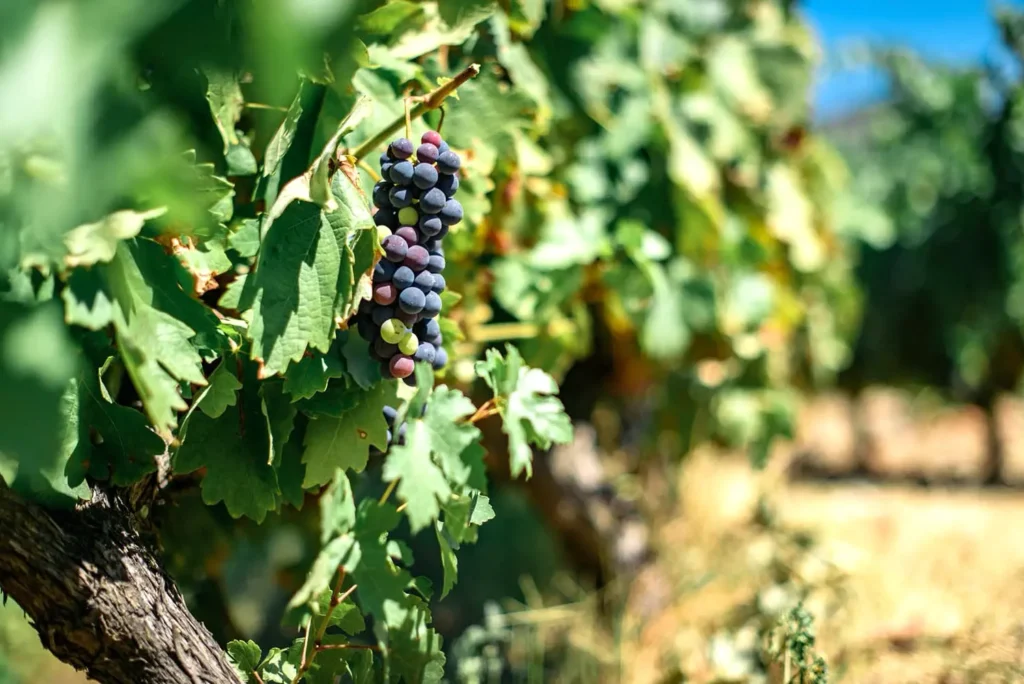
Winemaking is practised in six of Australia’s seven states, with more than 60 wine regions and 2,500 wineries. The most prestigious vineyards are concentrated in the coastal areas of the south, where the Mediterranean climate, fertile soils, and sea breezes create ideal conditions for producing world-class wines. Key Australian wines include shiraz, cabernet sauvignon, merlot, chardonnay, sauvignon blanc, semillon, riesling, viognier, pinot noir, grenache, sangiovese, and pinot gris.
The wines sold here are usually inexpensive varietals at €8-10 a bottle. In Australia, they cost 2-3 times cheaper. On such bottles, south-eastern Australia is indicated instead of a specific region of origin. But it is still an excellent young wine. More serious wines will display the state or even the exact production area. Such wines should be sought in specialised shops.
Victoria (Melbourne) and New South Wales (Sydney) are the states with the most vineyards. They are followed by Tasmania and Western Australia. In total, there are more than 60 wine regions in the country. The Yarra Valley, Hunter Valley, Margaret River, Barossa Valley, Coonawarra, and McLaren Vale are the most famous. But regardless of the region’s popularity, you’ll get a warm welcome and good wine everywhere. If you want to relax and spend a nice testing wine day, we choose to stop on Yarra Valley winery tours with Wildlife tours. This team has been in the marketplace since 1998 and knows how to deliver the best life experience.
And in general, such a journey is not only about wineries. There are restaurants around, often staffed by renowned chefs, colourful local pubs, cheese factories and chocolate factories – also with tastings. And, of course, when travelling through the countryside, be prepared to encounter kangaroos, koalas, ostriches, and wombats along the way.
I don’t think it’s necessary to recommend any particular wineries to visit. If you find yourself in Australia, just pick the nearest wine region. You can check reviews of a specific winery on Google Maps. It didn’t let me down. I decided to visit the Macedon Ranges region in Victoria, a few hours’ drive from Melbourne. Macedon is derived from ‘Macedonian.’ It must have once been settled here by people from that country. Trip itinerary (and it didn’t just include wine) looked like this:
- Day 1: Mount Towrong – Mount Towrong winery – Holgate Brewhouse restaurant and brewery – Trentham town and waterfall – Railway Hotel motel estate and historic pub in Castlemaine.
- Day 2: Vintage Market and Austrian coffee shop – Zig Zag winery – Daylesford Springs Mineral Springs.
Mount Taurong and the First Winery
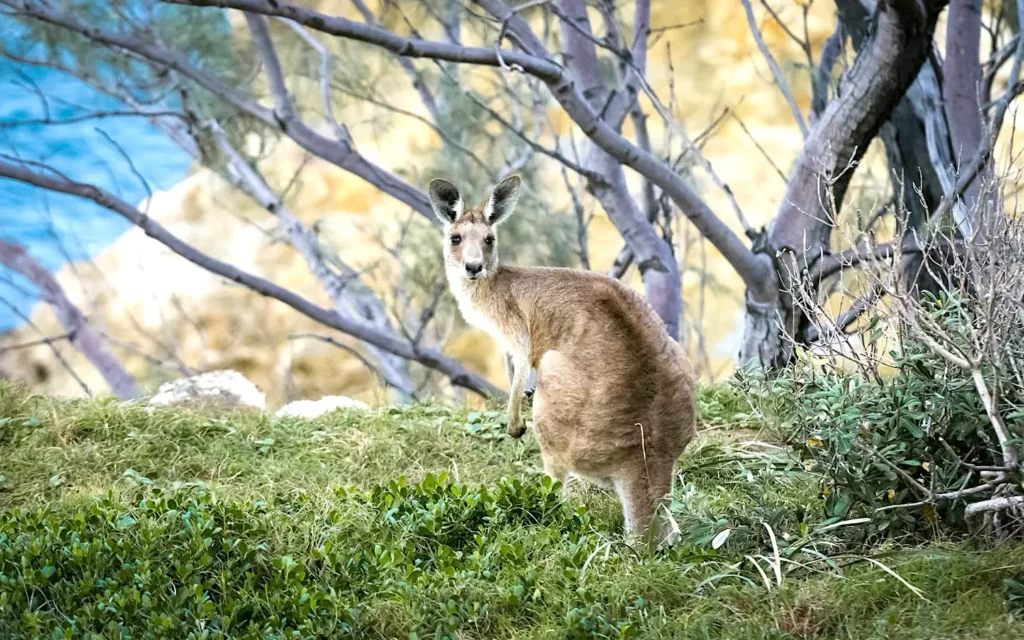
We leave Melbourne, drive about an hour on the motorway to the north-west and then climb the winding road up to Mount Taurong. We get out of the car, and the smell of eucalyptus trees warmed by the summer sun hits our noses like pine needles in our forests in the heat. We follow the trail up to the Camel’s Hump lookout. The views of the plain from the mountain are magnificent. I can almost physically feel some springs in my head unclenching and releasing the tension after the big city. While I’m admiring the views, a spider falls on me. It’s small, but all stereotypes about Australia instantly pop into my head. With round eyes, I examine my arm. My Aussies are laughing.
We descend the mountain and drive to the first winery, Mount Towrong Vineyard. The packing, the drive, the clean air… And all we manage to ‘grab’ in the morning is coffee and toast. In short, by this time, we’re more hopeful that we’ll be able to eat than drink. Besides, Mount Towrong also has its restaurant.
On site, the first surprising discovery awaits me. Is this what you picture when you think of country wineries? I picture vineyards, the summer terrace of a large house, maybe even an old mansion, and wicker chairs. Mount Towrong turns out to be a small rectangular ultra-modern structure of concrete, wood, and metal. With vineyards, though. It looks posh, but there is not a single table available. Our hopes for lunch are fading. But now that we’re here, we don’t pass up the opportunity.
We stand at the counter. To the right is the open kitchen, which is bustling with life. Servers are running back and forth with plates; it’s crowded, and the alarming news about the pandemic is still coming in from overseas. Nevertheless, someone always manages to run up to us, pour wine, and say a few words. Australians, even in such a hurry, remain good-natured and open. It pays off.
Tastings are free. Usually, there is a tasting set of 6-8 wines, which you will be offered in a particular order. White wines come first, then reds, light young wines first, then complex and concentrated wines, first dry, then dessert wines. Each wine is poured in about 25-50 ml. You can drink all of them, or have a taste and pour the rest into a special bucket.
Although you don’t pay for tasting, nobody will look askew if you don’t buy anything. They understand that if you like it, you will buy it later anyway. Or stay in the restaurant. Or tell your friends. Or come back. But honestly, it’s hard not to buy. You’re thinking, ‘What are we gonna do, lose the wine?’ True, in Mount Towrong, we buy not wine, but a bottle of absolutely amazing gin from local herbs.
The tasting went beautifully. But the question of lunch is still unresolved. The friend who is driving is not having any luck – we can’t drink, and there is no food. We drive to Woodend, a small town nearby. On the way, we google local restaurants and pubs and find the Holgate Brewhouse restaurant and brewery.
It’s really cool to drive and contemplate the life of these small Australian towns outside the window. Thinking about how people live here. I always thought I couldn’t live away from the metropolis. It seemed like it would lack all the amenities it provides. But in Australia, small towns are very comfortable, with great restaurants, modern cinemas, and libraries. It seems I could very well live in one of those.
The Wombat Trail and Gold Rush Town
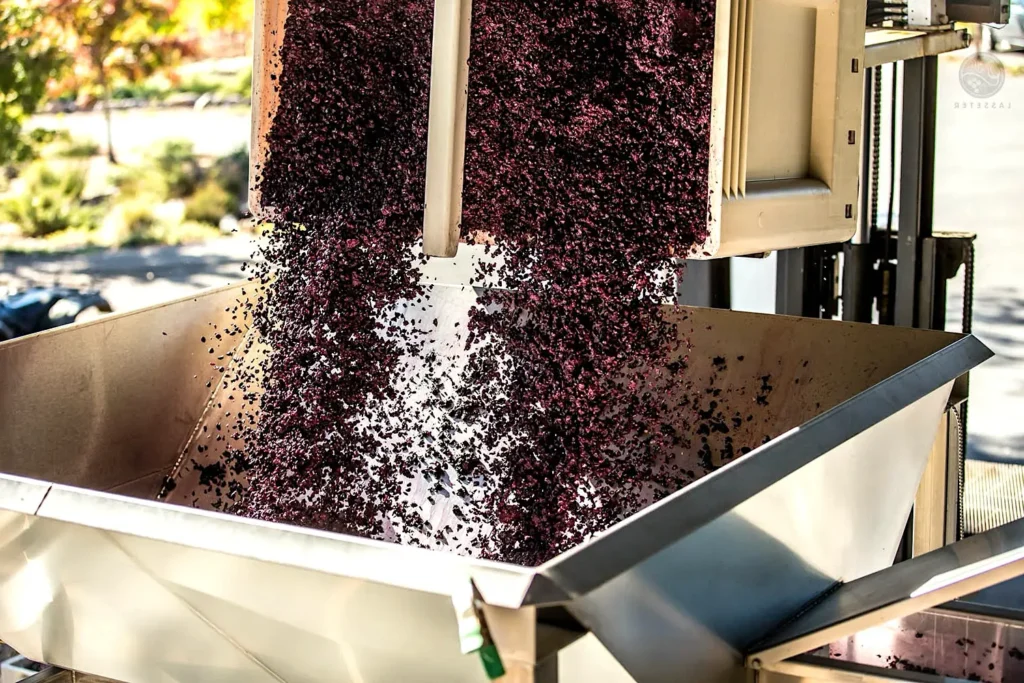
After a lovely lunch with a beer set at Holgate, we drive to another town – Trentham.
Tiny Trentham is famous for its Trentham Falls – 32 meters, the highest in Victoria, olive oil, and the quaint Red Beard Bakery. This is where we pop in for a coffee and to see the bread oven, which has been in operation for 120 years.
Near Trentham is the Wombat Trail, a walking trail about 8 kilometers long. Wombats are these Australian hamsters about the size of a small dog. Unfortunately, not a single wombat is in sight. Although, of course, we don’t walk the whole eight kilometers. We have time to see the waterfall and get to Castlemaine, where we have booked an overnight stay.
The last leg of the day, and we’re in Castlemaine. This is one of the key towns of Australia’s gold rush era. In 1851, a local sheep farmer found a large deposit of gold here, but he kept quiet about his discovery. He and three of his friends earn a year’s wages in a month by manually mining the deposit. But rumors of the incredible wealth spread quickly. And thousands of people begin exploring the streams around the area, discovering gold here and there. By 1852, the population of the future Castlemaine grows dramatically to 30,000.
Now, it’s still a thriving small town with a rich cultural life. We’ll explore it more tomorrow. For today, all we can do is check into a motel and stomp to the pub. Campbell St Lodge Motel occupies an old mansion with high ceilings, a wooden staircase, and paintings on the walls.
The Railway Hotel Castlemaine pub is also historic. It has an atmosphere like it’s been here since the town got rich from gold mining. I go to the website and read that the pub actually opened in the mid-1800s. Seems like the whole town’s here. Pensioners, families with children, young people crowding the counter. Traditionally Australian pubs are large and, in some ways, act as a local club. The Railway, for example, has a bar, bistro, outdoor veranda, and beer garden. Interestingly, even the smallest community of three houses will have its own pub. The portions are huge, and the food is delicious (they say a titled chef works here). We order food from the menu. And craft beer – at the counter. You pay for the beer at once. They usually sell beer from local breweries. Some varieties can be tasted only in a particular region. Beer, like wine, is excellent here. Tipping is not accepted in Australia.
We walk through the quiet streets of Castlemaine back to our mansion-motel. After Melbourne, the silence around us seems almost unreal. When I first stayed in a motel on my last visit to Australia, it was a ‘classic’ roadside motel from American films. The stereotypes were so strong that I kept waiting for someone to break into our room, and it was going to get crazy. And now it’s the motel again, only now I’m waiting for the first ghost to show up. Instead, we drink the gin we bought in the afternoon on the ancient balcony, look at the stars, and talk about the world’s fate. We shut up for a few minutes and sit in silence. By a strange coincidence, at that moment, people pass by downstairs talking about the same thing. We shrug and decide it’s time to go to bed.
Farmer’s Market and Vintage Market
The second day of our winery tour begins, however, not with wine but with coffee. Or rather, even with tasting everything at the local farmer’s market. We stop by there out of interest, leaving with a week’s worth of groceries. Once again, I am surprised by the Australian sense of humor and names. They open a restaurant in an old church building and call it Gods Kitchen, or Holy Goat Cheese.
With difficulty, we leave the market and head to another colorful place, The Mill. This location (and in particular, the divine sausages at Vienna’s Das Kaffeehaus) was originally one of the goals of the trip. Since 1875, it has been home to a woolen mill. Now local artisans, artists, antique dealers, and restaurateurs have moved in. The red brick factory buildings remind me of the blessed Oktyabrskaya in Minsk.
Das Kaffeehaus – an Austrian (that’s not a mistake) coffee shop – is packed with people from the very morning. While we are waiting for our order, we go to have a look around. Behind a small office in the far corner, we see coffee roasters, bags of coffee, and some equipment. From somewhere, the owner appears with a tray loaded with cups, opens a low door, and invites us to enter the shop. In small family restaurants, the owners serve the customers along with the waiters. And no one can tell you more about the business than the owner. The owner proudly informs us that she and her husband have been eyeing this place for a long time because it used to be a crematorium, and its chimney is perfect for a coffee roasting shop. Well, okay.
In addition to the coffee shop, the Mill has a huge vintage market and antique shop, a Shedshaker restaurant and brewery, several cafes, artist studios, and the Boomtown Wine Co-op. Although there are a few more wineries on the agenda today, we stop by Shedshaker Brewing restaurant and brewery, stroll through the botanical garden opposite the Mill and the Castlemaine Artists Market, where local artists sell their work. It doesn’t look like a fair, but rather a town club where residents come at weekends to relax and exchange news.
How to Leave the Office in England and Go Into Sustainable Winemaking
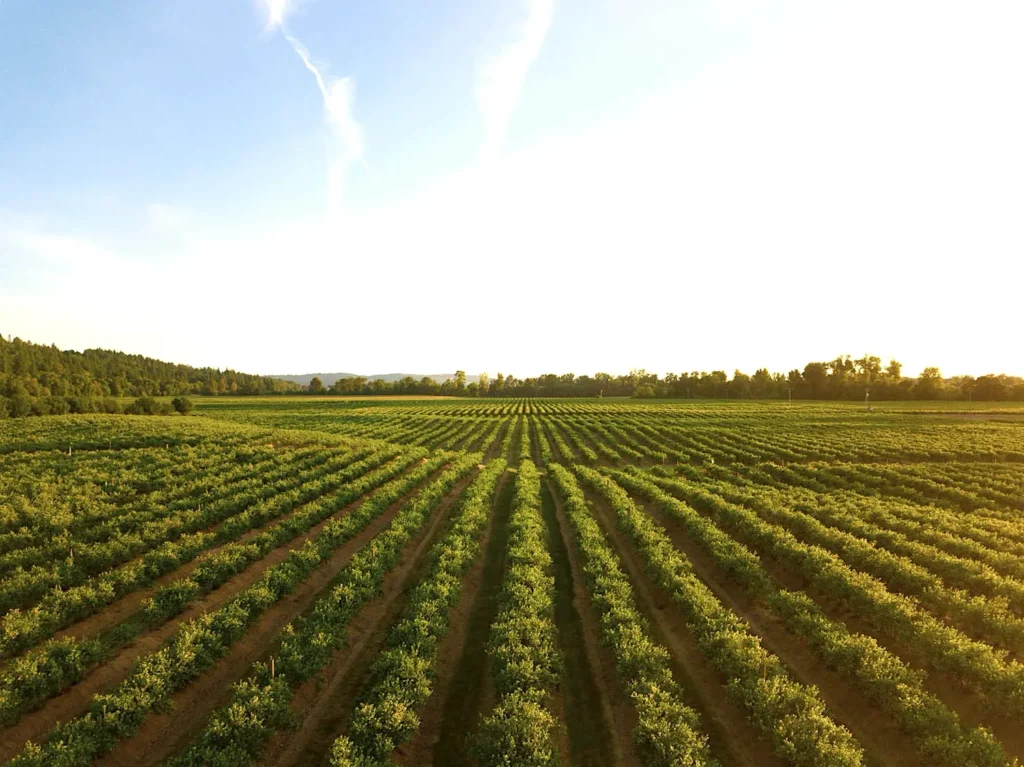
It’s a shame to say goodbye to Castlemaine, but it’s time. Our next destination is Zig Zag Rd Wines, a small, family-run winery with a score of 5.0 on Google Maps. We drive past vineyards sheltered by white netting from birds. Barrels stand around the building, a dog lies lazily on the wooden floor of the cozy terrace, and the doors are open. Looking around for people, we notice a guy in his thirties hurrying towards us from the field. There are no other visitors, the winery is quite small, and no organized tours come here. Eighty percent of the local wineries are family-run. There are larger wineries, but there is a more conveyor belt approach not only to winemaking but also to tourists.
Henry, the winemaker, invites us inside. We already guess that we are in for an interesting story, but we have no idea yet how generous the tasting will be. Even a friend who is driving is persuaded by the owner to have a sip or two. In Australia, there are limits for drivers. Henry knows them. Zig Zag finally reveals wicker chairs, a vine-covered terrace, and pastoral views.
We drink incredibly delicious wine and listen to the story of the owners’ move – a married couple from England. They wanted to leave the office and do something on the land. It was too expensive to do this in their home country, so the guys chose Australia. Their philosophy is to grow grapes slowly, albeit with smaller yields, but with better quality and minimal damage to the soil. No fertilizer. Ferment wine with wild yeast, not yeast from a lab. Feel the process and enjoy it.
Henry says he was up half the night today because it was the first frost of autumn (autumn starts in March in Australia) and he’s been burning fires and fumigating the vineyards since four in the morning. My sister laughingly remarks that our grandfather in Ukraine does the same thing.
Daylesford and the Mineral Springs
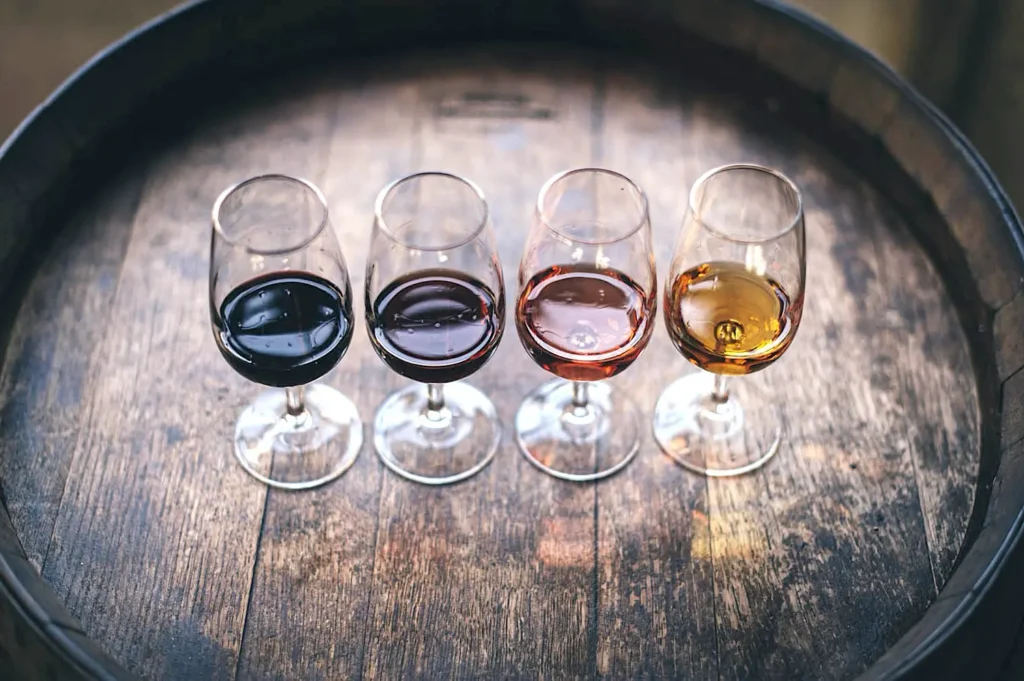
After an hour in Zig Zag, we realize that we need to either leave now or we will stay here to live. According to the plan, we want to visit Daylesford Springs in the resort town of Daylesford. It’s perfect after two days of tasting. We’ll pass a couple more wineries before that. We’re not going inside, we’re heading for the water.
But first, we have to have lunch. You may think that on this trip we are only looking for a snack and eating it. We are. We grab some delicious Fish & Chips at Daylesford Seafood Bar and drive to the lake, which is also called Daylesford. Fish & Chips is a traditional Australian dish of seafood and fries. The seafood can be anything you like. Seafood bars are incredibly cool because you choose fresh seafood on display, and they fry it right in front of you. They have them all over Australia.
At the site, we circle around the lake and drink mineral water. It’s pungent and makes your face tingle. Through Daylesford runs the Goldfields Track, a historic gold prospectors’ route from Ballarat to Bendigo. 210 kilometers. But that’s for another time.